

Submission Deadline:
June 30th, 2026
Notification of Acceptance:
July 12th, 2026
Conference Dates:
July 23-25, 2026
Prof. Dr. Rumen Mironov
lab. 1228, fl. 2, bldg. 1
Technical University of Sofia
8 Kliment Ohridski Blvd.
1756 Sofia
Bulgaria
E-mail: namsp2026@gmail.com
Tel: +359 2 965 3283
Contact for China
Editor Chaoming Yang
IRNet China, Wuhan
QQ:2317185350
Tel: 15527861909 (Editor Tang)
7th International Workshop on New Approaches for
Multidimensional Signal Processing
NAMSP 2026
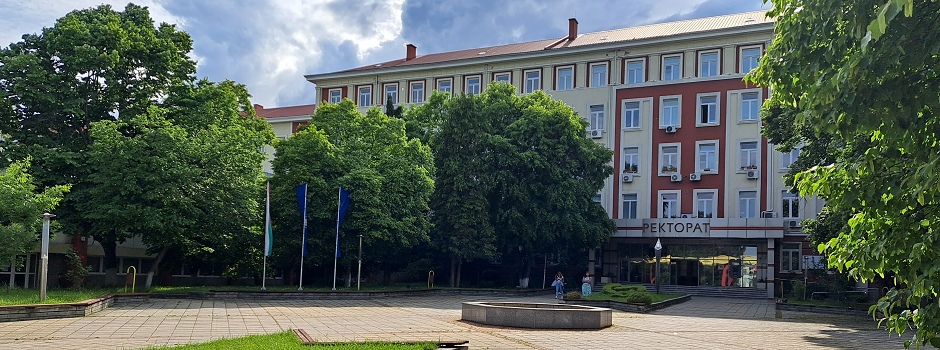
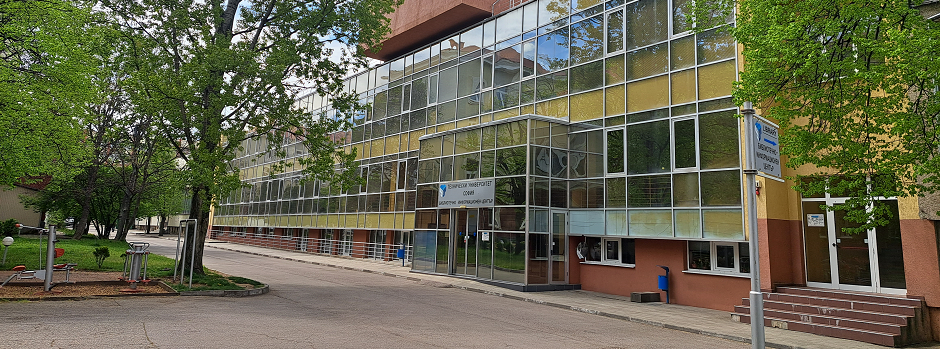
Technical University of Sofia, Sofia, Bulgaria
July 23-25, 2026
Plenary Speakers

Prof. Liang Zhou, Shanghai Jiao Tong University & Shanghai University of Medicine and Health Sciences, China
Title of Lecture:
Construction of an ICU Monitoring and Life Support System Driven by Synchronous Bus Architecture and Explainable AI
Abstract: The intensive care unit (ICU), as the clinical setting with the highest data density in hospitals, is currently confronted with an unprecedented "data deluge"—multi-source parameters such as ECG, blood pressure, oxygen saturation, and ventilator readings are generated continuously at millisecond intervals, forming a torrential stream of heterogeneous data. However, due to disparate device interfaces and misaligned timestamps, this valuable data often fails to translate into effective clinical decision support. Taking sepsis as an example, it accounts for approximately 20% of ICU admissions in China, with an in-hospital mortality rate as high as 32.1%, while the early warning window is frequently obscured by "data noise." To address this critical bottleneck, our team has systematically developed a next-generation AI-enabled monitoring and life support system for the ICU, following a dual-track approach of hardware-software synergy and explainable algorithms.
We propose a data integration framework based on a synchronous bus architecture, which enables raw data acquisition from multi-source sensors and high-speed inter-chip collaborative computing. This framework precisely aligns multimodal physiological indicators—including ECG, blood pressure, respiration, and oxygen saturation—under a unified time-series bus, constructing a synchronized data stream with millisecond-level precision. This design effectively resolves the core challenges of dispersed data sources and temporal misalignment in the ICU, thereby providing high-quality, and integrated multimodal time-series inputs for downstream predictive models. On this foundation, we further integrate causal inference with explainable AI techniques—moving beyond merely answering "how high is the risk" to also addressing "why the risk is elevated" and "which factors are modifiable"—thus establishing a transparent closed-loop decision-making process that encompasses early warning, real-time monitoring, and intervention recommendations.
Biographical Notes:
Liang Zhou, Ph.D., Doctoral Supervisor, Shanghai Outstanding Leader in Rehabilitation Medicine, Craftsman in White Magnolia Rehabilitation. Visiting Professor at St. Paul Information University of Science and Technology in North Macedonia, Dual-appointment Professor at University of Banja Luka in Bosnia and Herzegovina, Academic Leader of the Rehabilitation Medicine Department at Gongli Hospital, Pudong New District, Shanghai, Dual-appointment Principal Investigator at Tai'an Central Hospital in Shandong Province. He has been selected for the "Outstanding Young Talent Cultivation Program" of Shanghai Jiao Tong University School of Medicine, the "Overseas Outstanding Young Talent" program of the Republika Srpska in Bosnia and Herzegovina, and serves as the Leader of the Shandong Provincial Health Leading Science and Technology Innovation Team. He holds the positions of Executive Deputy Director of the Shanghai 5G+ Smart Healthcare Innovation Laboratory, Executive Deputy Director of the Shanghai Intelligent Medical Appliances and Active Health Collaborative Innovation Center, Executive Director of the China Yangtze River Delta – Balkan Peninsula Biomedical International Technology Transfer Collaborative Innovation Center, and Executive Deputy Director of the Medical Intelligence Development Institute, China Hospital Development Institute of Shanghai Jiao Tong University. He is also the Vice President of the Smart Hospital Technology Transformation Branch of the National Health Industry Enterprise Management Association, Secretary-General of the Health Management Branch of the China Medical Equipment Association, and Deputy Secretary-General of the Harvard University Alumni Association of the Shanghai Overseas Returned Scholars Association.
His main research fields include active health and smart wellness care. He has dedicated to research in the field of medical-engineering integration in a long-term, specializing in explainable artificial intelligence and its applications in wellness care. He focuses precisely on addressing pain points and challenges in medical services and wellness care, breaking through key technologies such as machine vision, human-machine collaboration, and cluster control. As a core member, he has innovatively established a new generation of remote medical service models and application platforms, effectively enhancing the overall operational efficiency of the healthcare service system. Simultaneously, as a core member, he has deeply developed the "5G+ Smart ICU" application scenario, which was selected for the "National Excellent Project List of 5G+ Healthcare Application Pilots" organized by the Ministry of Industry and Information Technology and the National Health Commission, becoming a national demonstration benchmark for 5G+ smart healthcare and actively promoting the high-quality development and digital transformation of medical services.
In recent years, he has successively led and undertaken projects such as the National Natural Science Foundation of China and "Science and Technology Innovation Action Plan" in Shanghai Science and Technology Commission. He has also participated as a core member in 16 various research projects, including the Ministry of Science and Technology's National Key R&D Program and the National Natural Science Foundation's Major Research Plan. He has published over 80 papers in domestic and international core journals, including those indexed by SCI and EI, and obtained 32 self-developed technology patents and software copyrights. He serves as the Editor-in-Chief of the Scopus-indexed journal International Journal of Electronic Healthcare, Associate Editor of the International Journal of Intelligent Systems Technologies and Applications,which is EI-indexed, Associate Editor of the SCI-indexed journal, Emerging Materials Research, and Associate Editor of the SCI-indexed journal, Applied Intelligence.